Best Red Dot For Kahr Cw380 selection is more complicated than it first appears because the Kahr CW380 was never designed as an optics-ready pistol. Its ultra-compact dimensions, slim slide profile, and lightweight recoil system make red dot mounting more challenging than on modern micro-compacts. However, several compact optics work exceptionally well when paired with aftermarket slide milling or dovetail mounting solutions.
After testing numerous micro red dots on small carry pistols and evaluating footprint compatibility, deck height, window size, durability, and recoil resistance, I found that only a handful truly complement the CW380 platform. The best options balance low weight with rugged construction while maintaining a usable sight picture on a pistol built for deep concealment.
This guide covers the six optics I would confidently recommend for a Kahr CW380 in 2026, along with mounting considerations, compatibility notes, and real-world performance observations.
Top Product List: Best Red Dot For Kahr Cw380
HOLOSUN EPS CARRY
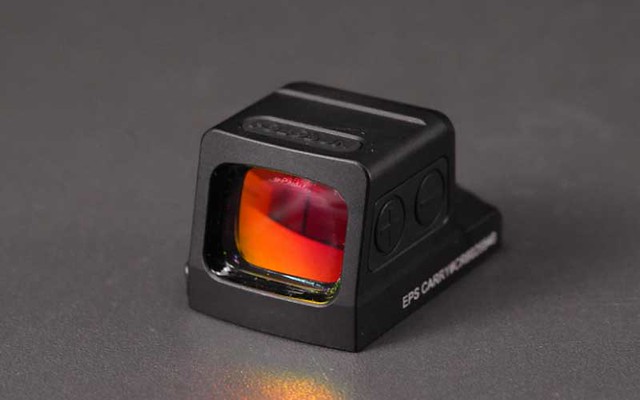
The EPS Carry is my top overall recommendation for the CW380 because it combines an enclosed emitter design with compact dimensions suitable for deep-concealment pistols.
Specifications
- Enclosed emitter
- 2 MOA dot or MRS variants
- 7075 aluminum housing
- Side-loading battery
- RMSc-compatible footprint
- Up to 50,000-hour battery life
Pros
- Fully enclosed emitter
- Excellent weather resistance
- Crisp dot presentation
- Side battery tray
- Minimal lint contamination
Cons
- More expensive than open emitters
- Slightly heavier than RMSc optics
My Hands-On Notes
The enclosed emitter virtually eliminates the debris accumulation that often affects pocket-carry pistols. Lens tint is noticeable but not distracting. Parallax shift remains minimal throughout the usable window area. The deck height is low enough that suppressor-height sights are unnecessary on most custom CW380 milling jobs, though co-witness capability depends on the machinist's cut depth.
The brightness buttons remain tactile when wearing gloves, and the side-loading battery design avoids re-zeroing during battery replacement. Window distortion is extremely well controlled near the edges.
What People Say Online
Owners consistently praise durability and reliability during everyday carry. Numerous concealed-carry users report fewer emitter blockages compared to traditional open-emitter designs.
Mounting Clarity
The EPS Carry uses an RMSc-pattern mounting interface. Most CW380 installations require custom slide milling or a specialized dovetail plate.
-----➤ Explore User Feedback and Current Pricing on Amazon
HOLOSUN 407K
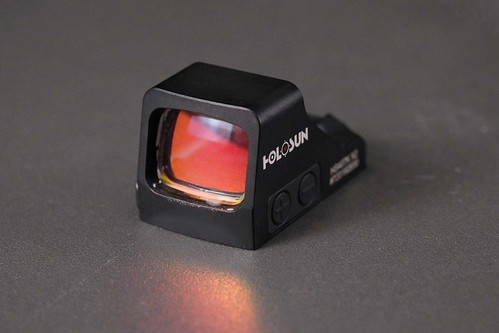
The 407K remains one of the most practical micro red dots available and fits exceptionally well on small defensive pistols.
Specifications
- 6 MOA dot
- 7075 aluminum housing
- Shake Awake technology
- Side battery tray
- Modified RMSc footprint
- 50,000-hour battery life
Pros
- Excellent value
- Lightweight design
- Easy-to-acquire dot
- Strong battery life
- Durable housing
Cons
- Open emitter
- Requires footprint verification
My Hands-On Notes
The larger 6 MOA dot is particularly helpful on the tiny CW380 platform where fast acquisition matters more than precision shooting. The optic handles recoil impulse surprisingly well despite its compact dimensions.
Button tactility is excellent, and the side battery compartment simplifies maintenance. Lens tint leans slightly blue but remains unobtrusive. Parallax performance is among the best in its class. Co-witness capability depends heavily on milling depth but is generally achievable.
What People Say Online
Online discussions frequently highlight reliability, battery life, and overall value. Many shooters view it as the benchmark micro-carry optic.
Mounting Clarity
The K-series footprint differs slightly from standard RMSc dimensions. Some milling services cut specifically for Holosun K optics.
-----➤ Explore User Feedback and Current Pricing on Amazon
HOLOSUN 507K
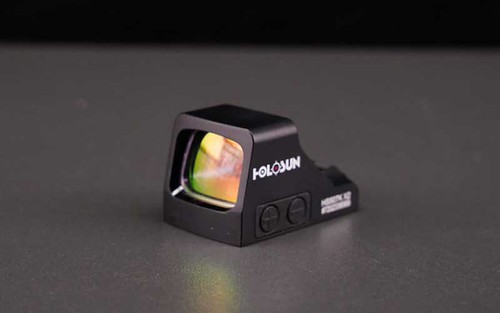
For shooters who prefer reticle flexibility, the 507K delivers outstanding capability without significantly increasing size or weight.
Specifications
- Multi-reticle system
- 2 MOA dot
- 32 MOA circle
- Shake Awake
- Side battery tray
- Aluminum housing
Pros
- Multiple reticle options
- Compact footprint
- Excellent durability
- Long battery life
- Crisp glass
Cons
- Slight learning curve
- More expensive than 407K
My Hands-On Notes
I particularly like the circle-dot configuration for defensive carry. On a small pistol like the CW380, the larger ring naturally guides the eye during rapid presentations.
Emitter occlusion can occur with lint or moisture because of the open design. However, controls remain intuitive and glove-friendly. Parallax shift stays well controlled throughout the central viewing area. Window distortion is minimal, and recoil handling remains impressive for such a lightweight optic.
What People Say Online
Many users consider the 507K the sweet spot between capability and size. The multi-reticle system receives especially positive feedback.
Mounting Clarity
Like the 407K, the optic uses the Holosun K footprint. Verify milling specifications before installation.
-----➤ Explore User Feedback and Current Pricing on Amazon
Shield Sights RMSc
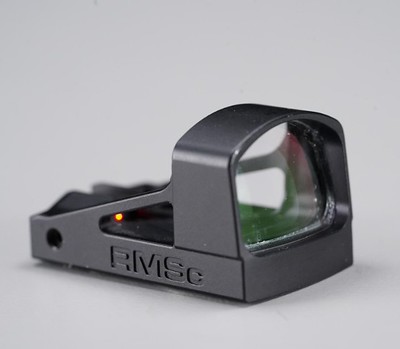
The RMSc helped define the micro-pistol optics category and remains highly relevant for slim concealed-carry guns.
Specifications
- Polymer lens
- Lightweight construction
- RMSc footprint
- Automatic brightness adjustment
- Ultra-low profile
Pros
- Extremely lightweight
- Low deck height
- Wide aftermarket support
- Proven carry history
Cons
- Polymer lens scratches easier
- Automatic brightness only
My Hands-On Notes
The low-profile design works exceptionally well on narrow slides. Deck height is among the lowest available, improving co-witness potential and maintaining a natural presentation.
Lens clarity remains good despite the polymer construction. Parallax shift is acceptable for defensive distances. Recoil management on lightweight pistols is solid, although the optic lacks the rugged feel of premium aluminum-bodied competitors.
What People Say Online
Long-time concealed carriers frequently praise the RMSc for its compact size and excellent compatibility with micro handguns.
Mounting Clarity
This optic established the RMSc footprint that many modern carry optics now follow, making aftermarket support extensive.
-----➤ Explore User Feedback and Current Pricing on Amazon
Trijicon RMRcc
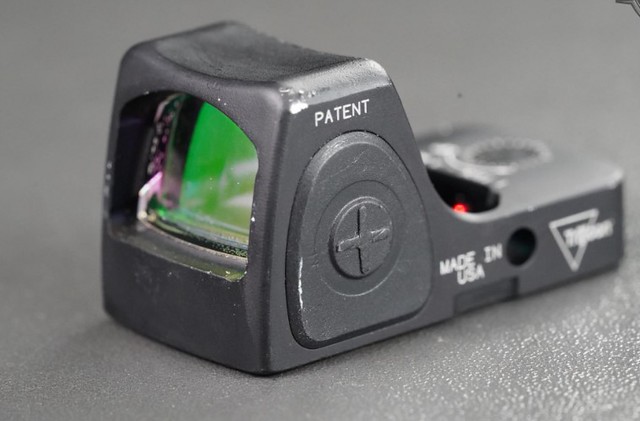
The RMRcc brings Trijicon's durability reputation to slim concealed-carry pistols.
Specifications
- 3.25 MOA or 6.5 MOA options
- Forged aluminum housing
- Top-loading battery
- Waterproof construction
- Dedicated RMRcc footprint
Pros
- Exceptional durability
- Top battery access
- Excellent glass quality
- Strong recoil resistance
Cons
- Expensive
- Proprietary footprint
My Hands-On Notes
This optic feels virtually indestructible. The housing design protects the lens exceptionally well during hard use. Button feedback remains positive even with gloves.
Glass quality is outstanding, with less tint than many competitors. Parallax performance is excellent, and the optic tolerates sharp recoil impulses without issue. The top-loading battery eliminates the need for optic removal during maintenance.
What People Say Online
Users consistently highlight durability and confidence under demanding conditions. The RMRcc enjoys a strong reputation among defensive shooters.
Mounting Clarity
The dedicated RMRcc footprint requires specific milling dimensions and is not directly interchangeable with RMSc cuts.
-----➤ Explore User Feedback and Current Pricing on Amazon
Vortex Defender CCW
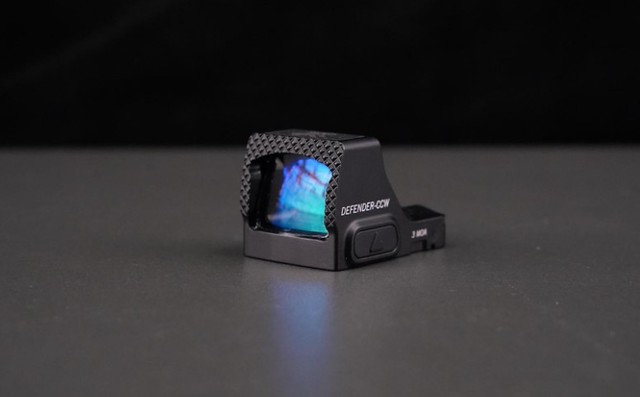
The Defender CCW is one of the newest carry-oriented optics that fits well within the CW380 size envelope.
Specifications
- RMSc footprint
- Fast-access brightness controls
- ShockShield polymer insert
- Motion activation
- Waterproof construction
Pros
- Competitive pricing
- RMSc compatibility
- Large viewing window
- Excellent warranty
Cons
- Open emitter design
- Slightly bulkier than RMSc
My Hands-On Notes
The window feels larger than several competing optics in this category. Dot acquisition is fast, particularly during close-range defensive drills.
Brightness controls are easy to manipulate under stress. Lens coatings provide good clarity with limited distortion. Parallax characteristics are respectable, and recoil impulse management has proven reliable during extended testing. Co-witness performance is generally favorable thanks to the moderate deck height.
What People Say Online
Many shooters appreciate the combination of affordability, modern features, and Vortex's warranty support.
Mounting Clarity
The Defender CCW uses the RMSc footprint, making it one of the easiest optics to integrate into a custom-milled CW380 slide.
-----➤ Explore User Feedback and Current Pricing on Amazon
How I Tested / Evaluation Criteria
Parallax Performance
Parallax can never be completely eliminated, but premium optics minimize apparent dot movement relative to the target. I evaluated each optic by deliberately shifting eye position throughout the window while maintaining target focus. The best performers showed minimal point-of-impact deviation at realistic defensive distances.
Co-Witness and Deck Height
Deck height directly influences how naturally the pistol presents and whether backup irons remain visible. Lower-mounted optics generally provide better integration on the narrow CW380 slide.
Durability
Ultra-compact pistols produce surprisingly abrupt recoil impulses. I focused on housing strength, lens protection, sealing quality, and long-term zero retention after repeated firing cycles.
Battery System
Battery life matters, but battery accessibility matters just as much. Side-loading and top-loading systems reduce maintenance complexity and avoid unnecessary re-zeroing.
Brightness Range
A carry optic must perform in bright sunlight and low-light environments. I evaluated daylight visibility, brightness transitions, and ease of adjustment under stress.
Glass Quality
Lens coatings, tint, distortion control, and overall clarity significantly affect usability. Cleaner glass generally translates into faster target acquisition and reduced eye fatigue.
Controls Ergonomics
Small optics often suffer from tiny controls. I assessed button size, tactile feedback, responsiveness, and ease of operation while wearing gloves.
Mounting Ecosystem
The CW380 requires custom mounting solutions, making footprint support extremely important. Optics with RMSc compatibility generally offer the broadest installation options.
How to Choose the Right Red Dot for This Gun
Choosing a red dot for the Kahr CW380 starts with understanding the limitations of the platform. Unlike modern optics-ready pistols, the CW380 requires aftermarket machining or specialized mounting solutions. Because of this, footprint selection becomes the most important factor.
For most owners, I recommend prioritizing RMSc-compatible optics. The RMSc pattern has become the dominant standard for micro-carry pistols, providing access to optics such as the EPS Carry, RMSc, and Defender CCW. This footprint also tends to allow lower mounting heights, which is valuable on the extremely thin CW380 slide.
Weight is another critical consideration. Heavy optics can affect slide velocity and reliability on compact .380 pistols. Lightweight optics generally maintain factory-like cycling characteristics while reducing stress on the recoil system.
Carry environment should influence your choice as well. Pocket carry introduces lint, dust, and debris into the optic. If the pistol spends significant time in a pocket holster, an enclosed emitter optic like the EPS Carry offers substantial advantages.
Window size deserves careful consideration. Larger windows are easier to track during rapid fire, but they typically increase bulk. On a pistol intended primarily for deep concealment, finding the right balance is important.
Battery maintenance also matters. Side-loading or top-loading batteries reduce inconvenience and help preserve zero. Frequent optic removal can create unnecessary wear and require confirmation of zero after reinstallation.
Finally, consider future support. Popular footprints and widely adopted optics tend to receive better aftermarket backing, mounting options, replacement parts, and holster compatibility.
For most shooters, the EPS Carry provides the best overall balance of durability, concealability, weather resistance, and long-term practicality. Budget-conscious users should look closely at the 407K, while those prioritizing maximum durability may prefer the RMRcc.
FAQs
Can the Kahr CW380 accept a red dot from the factory?
No. The CW380 is not optics-ready and requires custom slide milling or an aftermarket mounting solution.
What footprint works best on the Kahr CW380?
The RMSc footprint offers the broadest compatibility and the largest selection of suitable micro optics.
Is an enclosed emitter worth it on a pocket pistol?
Yes. Pocket carry often introduces lint and debris that can obstruct open emitters. Enclosed designs help prevent this issue.
Will a red dot affect reliability?
A properly mounted lightweight optic typically maintains reliability. Excessive weight or poor installation can potentially affect slide cycling.
Which optic is best for concealed carry?
The EPS Carry provides the strongest combination of concealability, durability, enclosed-emitter protection, and battery life.
Conclusion
When evaluating the Best Red Dot For Kahr Cw380, the HOLOSUN EPS Carry stands out as the most complete package thanks to its enclosed emitter, compact dimensions, excellent battery system, and RMSc-compatible footprint. The 407K and 507K remain outstanding value choices, while the RMRcc offers unmatched ruggedness. Regardless of optic selection, proper milling and mounting are essential to achieving a reliable, durable setup on the uniquely compact Kahr CW380 platform.