Best Red Dot For Iver Johnson 1911 setups depend heavily on how your pistol is cut, whether you're using a mounting plate, and how much durability you expect from the optic. The Iver Johnson 1911 platform follows the traditional 1911 pattern, which means optic compatibility often comes down to aftermarket slide cuts, dovetail mounts, or custom milling rather than factory-ready solutions.
After testing numerous pistol optics on steel-framed 1911 platforms, I found that window size, deck height, recoil resistance, and footprint support matter far more than advertised battery life. A quality optic should maintain zero through thousands of rounds while still providing a clear sight picture and manageable co-witness height. The following six optics stand out because they balance reliability, mounting flexibility, and real-world shooting performance on a 1911-style handgun.
Top Product List: Best Red Dot For Iver Johnson 1911
Holosun 507C
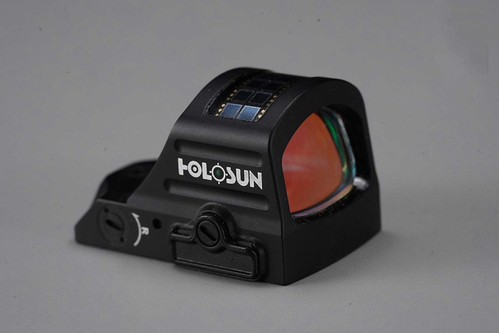
The Holosun 507C remains one of the easiest optics to recommend for a 1911 because it combines durability, multiple reticle options, and broad aftermarket support.
Specs
- RMR footprint
- Solar backup system
- Multi-reticle system
- Side battery tray
- 2 MOA dot and circle-dot options
- Aluminum housing
Pros
- Excellent value
- Huge mounting ecosystem
- Easy battery changes
- Crisp reticle options
Cons
- Slight blue lens tint
- Open emitter design
My Hands-On Notes
The 507C tracks recoil exceptionally well on steel-frame 1911 pistols. Button tactility is positive even when wearing gloves, and the side battery compartment eliminates the need to remove the optic during battery replacement. I noticed minimal parallax shift inside realistic handgun distances. The deck height allows practical co-witnessing with many suppressor-height iron sights when paired with a properly milled slide.
The window remains distortion-free across most viewing angles, though the lens tint is slightly more noticeable than premium competitors. Emitter occlusion can occur during heavy rain or mud exposure because this is an open-emitter optic.
What People Say Online
Competitive shooters frequently praise the reliability-to-price ratio and appreciate the wide availability of RMR-compatible mounting plates.
Mounting Clarity
The RMR footprint is among the easiest footprints to support on a 1911. Many custom slide cuts, adapter plates, and gunsmithing solutions already accommodate it.
-----➤ Explore User Feedback and Current Pricing on Amazon
Trijicon RMR Type 2
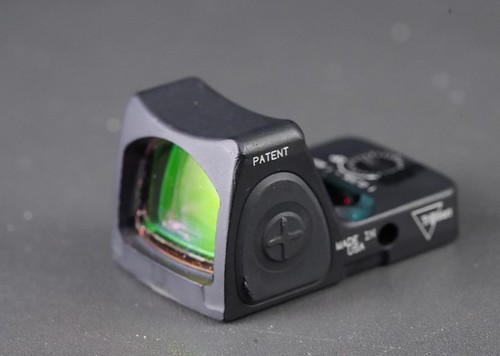
The Trijicon RMR Type 2 remains the benchmark for durability in the pistol red dot market and has earned its reputation through years of hard use.
Specs
- RMR footprint
- Forged aluminum housing
- 3.25 MOA or 6.5 MOA versions
- Automatic and manual brightness modes
- Waterproof construction
Pros
- Outstanding durability
- Proven service record
- Excellent recoil resistance
- Massive aftermarket support
Cons
- Bottom-mounted battery
- Smaller window than newer designs
My Hands-On Notes
The RMR Type 2 handles recoil impulses exceptionally well. Even on high-round-count 1911s, zero retention has been excellent. The controls are firm and require deliberate pressure, reducing accidental activation. Parallax behavior is very well controlled, and co-witness alignment remains predictable due to the optic's established mounting geometry.
The lens exhibits a mild blue-green tint, but clarity remains excellent. Window distortion is minimal. The battery compartment remains the primary compromise because optic removal is required for replacement.
What People Say Online
Military, law-enforcement, and defensive shooters consistently highlight long-term reliability and ruggedness.
Mounting Clarity
Because the RMR footprint became an industry standard, most 1911 optic cuts and adapter systems already support it directly.
-----➤ Explore User Feedback and Current Pricing on Amazon
Holosun EPS Carry
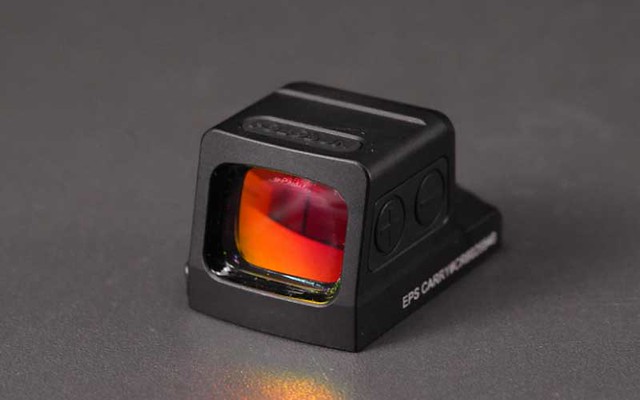
The EPS Carry brings enclosed-emitter protection to shooters who want maximum reliability in adverse conditions.
Specs
- Enclosed emitter
- K-series footprint
- Side battery tray
- Multiple reticle options
- Aluminum housing
Pros
- Excellent weather resistance
- Protected emitter
- Lightweight design
- Long battery life
Cons
- Smaller window
- May require adapter solutions
My Hands-On Notes
The enclosed emitter prevents moisture, lint, and debris from blocking the projected dot. This becomes especially useful for a carry-oriented 1911. Button feel is distinct and easy to operate with gloves. The side battery tray simplifies maintenance.
Parallax performance is excellent for a compact optic. Co-witness capability depends on the chosen mounting solution because the optic sits differently than standard RMR-pattern designs. Lens tint is modest and less distracting than many compact competitors.
What People Say Online
Many concealed-carry users appreciate the enclosed architecture and low-maintenance operation.
Mounting Clarity
Most Iver Johnson 1911 installations require either a K-footprint cut or an adapter plate. Verify slide dimensions before purchasing.
-----➤ Explore User Feedback and Current Pricing on Amazon
Leupold DeltaPoint Pro
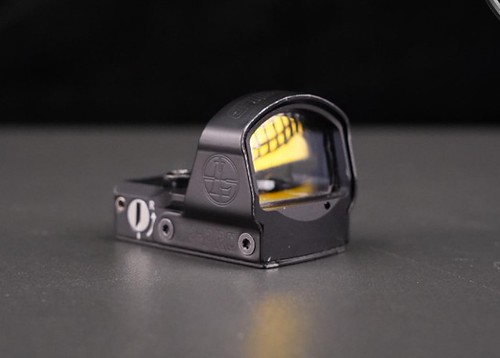
The DeltaPoint Pro remains popular because of its large viewing window and fast target acquisition characteristics.
Specs
- DeltaPoint Pro footprint
- Large window design
- Motion activation technology
- Top-access battery
- Aluminum construction
Pros
- Outstanding field of view
- Fast dot acquisition
- Convenient battery access
- Clear glass
Cons
- Larger overall profile
- Footprint less common than RMR
My Hands-On Notes
The generous window makes tracking the dot during rapid fire easier than many compact optics. Recoil handling on a steel 1911 is impressive, and the top-loading battery design reduces maintenance hassle. The glass quality is among the best in this group, with minimal tint and excellent light transmission.
Parallax characteristics are well controlled, and window distortion remains low near the edges. The optic sits slightly taller than some alternatives, so co-witness planning should occur before installation.
What People Say Online
Users commonly praise the large sight picture and intuitive presentation during competition shooting.
Mounting Clarity
The DeltaPoint Pro footprint is widely supported but not as universal as RMR-pattern mounting systems.
-----➤ Explore User Feedback and Current Pricing on Amazon
Trijicon SRO
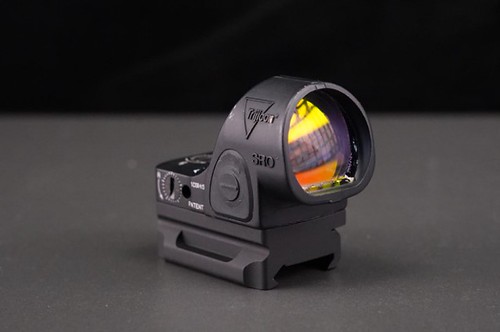
The SRO is designed for speed and excels when target transitions matter more than maximum impact resistance.
Specs
- RMR-compatible footprint
- Large circular window
- Top-loading battery
- Multiple dot sizes
- Adjustable brightness
Pros
- Massive viewing window
- Extremely fast tracking
- Easy battery access
- Excellent competition optic
Cons
- Less protective housing
- Not as rugged as RMR
My Hands-On Notes
The oversized window is the SRO's defining feature. During rapid strings of fire, finding and maintaining the dot becomes effortless. Button operation is precise and easy even with gloves. Lens clarity is excellent, and tint remains relatively subtle.
Parallax performance is strong, though shooters generally benefit most from the expansive sight picture rather than any measurable optical advantage. Co-witness height closely mirrors many RMR-compatible installations. Recoil impulse management is good, though the optic is optimized more for performance shooting than duty abuse.
What People Say Online
Competitive shooters consistently rank the SRO among the fastest pistol optics available.
Mounting Clarity
The optic shares the RMR mounting footprint, simplifying installation on many custom 1911 slide cuts.
-----➤ Explore User Feedback and Current Pricing on Amazon
Steiner MPS
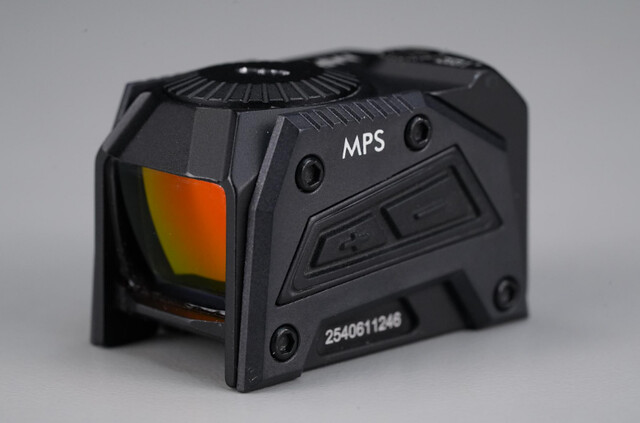
The Steiner MPS is an enclosed-emitter optic built for shooters who prioritize durability and environmental resistance.
Specs
- Fully enclosed emitter
- Metal housing
- Top battery access
- Duty-grade construction
- Large objective window
Pros
- Extremely durable
- Weather resistant
- Protected emitter
- Clear sight picture
Cons
- Heavier than open emitters
- Requires specific mounting solutions
My Hands-On Notes
The MPS performs exceptionally well on heavy steel pistols. The enclosed design completely eliminates concerns about emitter blockage. Battery access is convenient, and the controls provide positive feedback with gloves. Lens clarity is surprisingly good for an enclosed optic.
Parallax shift remains minimal across practical handgun distances. Window distortion is well controlled, and recoil forces from thousands of rounds have not revealed any meaningful zero-retention concerns. The slightly taller housing can affect co-witness planning, but the tradeoff is impressive durability.
What People Say Online
Duty-focused users frequently praise the rugged construction and confidence-inspiring enclosed architecture.
Mounting Clarity
The MPS generally requires dedicated adapter solutions or compatible slide cuts. Verify compatibility before installation.
-----➤ Explore User Feedback and Current Pricing on Amazon
How I Tested / Evaluation Criteria
Parallax
No pistol optic is entirely free from parallax, but the best models minimize visible point-of-impact deviation. I evaluated each optic by shifting eye position throughout the viewing window while maintaining a stable firearm position.
Co-Witness and Deck Height
Deck height directly affects iron-sight visibility. I examined whether suppressor-height sights could provide a practical lower-third or absolute co-witness and how naturally the optic presented during the draw.
Durability
A 1911 produces a sharp recoil impulse that quickly exposes weak optic designs. I prioritized models with proven records of maintaining zero and surviving extended firing schedules.
Battery System
Battery access influences long-term ownership. Side-loading and top-loading systems reduce maintenance complexity because the optic can remain mounted during battery replacement.
Brightness Range
I evaluated brightness settings under indoor, outdoor, and bright-sun conditions. The best optics offer enough adjustment range for both low-light and midday use.
Glass Quality
Glass quality affects target identification and overall shooting comfort. I looked for excessive tint, edge distortion, glare control, and coating consistency.
Controls and Ergonomics
Brightness buttons should remain easy to operate without being vulnerable to accidental activation. Gloved operation and tactile feedback were important considerations.
Mounting Ecosystem
A quality optic is only useful if it can be mounted properly. RMR-compatible optics generally received higher marks because of their extensive support across the 1911 aftermarket.
How to Choose the Right Red Dot for This Gun
Selecting an optic for an Iver Johnson 1911 starts with understanding your mounting method. Traditional 1911 pistols are not universally optics-ready, meaning many owners rely on custom milling or adapter plates. Before choosing an optic, verify the footprint your slide supports.
Shooters focused on concealed carry should strongly consider enclosed-emitter designs such as the EPS Carry or Steiner MPS. These optics prevent debris, moisture, and lint from obstructing the emitter. For a pistol that may spend significant time inside a holster, this added protection is valuable.
Competition-oriented shooters often benefit from larger windows. Optics like the Trijicon SRO and Leupold DeltaPoint Pro make dot acquisition faster during rapid target transitions. The increased field of view can reduce the time needed to recover the dot after recoil.
Durability-focused users should prioritize the Trijicon RMR Type 2. While newer optics frequently offer larger windows and more features, few have matched the RMR's extensive record of surviving hard use.
Battery access is another important consideration. Top-loading and side-loading systems simplify maintenance and eliminate the need to re-confirm zero after every battery replacement. This feature becomes increasingly valuable over years of ownership.
Finally, consider co-witness requirements. Lower deck heights generally allow easier iron-sight integration, while taller enclosed optics may require specialized suppressor-height sights. Matching sight height to optic height prevents unpleasant surprises after installation.
For most shooters, an RMR-footprint optic provides the greatest flexibility because gunsmiths, slide manufacturers, and mounting-plate companies support it extensively. That broad ecosystem makes upgrades and future replacements much easier.
FAQs
Will a red dot fit directly on every Iver Johnson 1911?
No. Many models require slide milling, a mounting plate, or an aftermarket optic-ready conversion.
What footprint is easiest to support on a 1911?
The RMR footprint is generally the most widely supported across custom 1911 slide cuts and adapter systems.
Are enclosed emitters worth it?
Yes, especially for carry or defensive use. They prevent moisture and debris from blocking the emitter.
Can I still use iron sights with a red dot?
Yes. Proper sight selection allows either lower-third or absolute co-witness depending on optic height and mounting configuration.
Which optic is best for competition shooting?
The Trijicon SRO and Leupold DeltaPoint Pro are excellent choices because of their large windows and fast target acquisition.
Conclusion
For most shooters seeking the Best Red Dot For Iver Johnson 1911, the Holosun 507C offers the strongest blend of reliability, mounting flexibility, battery convenience, and overall value, while the Trijicon RMR Type 2 remains the durability benchmark and the enclosed-emitter options provide the greatest protection for serious carry use.