Best Red Dot For Hunting Dangerous Game setups prioritize absolute reliability, rapid target acquisition, and the ability to withstand brutal recoil from rifles chambered in cartridges such as .375 H&H, .416 Rigby, .458 Lott, and .45-70 heavy loads. When hunting buffalo, brown bear, grizzly, or other dangerous game, a red dot sight often provides a significant speed advantage over traditional magnified optics at close range.
I have spent years evaluating optics on hard-recoiling rifles, slug guns, and dangerous-game platforms. The most important factors are not simply brightness or battery life. Recoil resistance, mounting security, lens durability, emitter protection, and compatibility with proven mounting systems matter far more when an animal can cover twenty yards in seconds. The six optics below consistently stand out for reliability, ruggedness, and mounting flexibility in demanding hunting environments.
Top Product List: Best Red Dot For Hunting Dangerous Game
Aimpoint Micro T-2
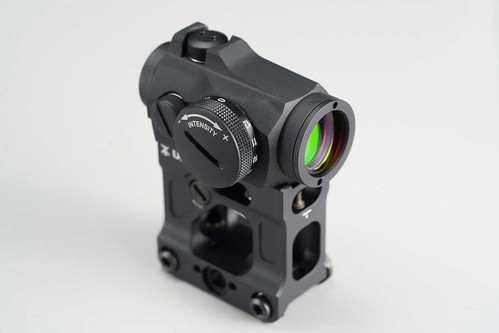
The Micro T-2 remains one of the most trusted dangerous-game optics available. Its compact design, outstanding battery life, and proven durability make it a favorite on safari rifles and guide guns.
Specifications
- 2 MOA dot
- Fully enclosed emitter
- 50,000-hour battery life
- Night vision compatible
- Aimpoint Micro footprint
- Waterproof construction
Pros
- Extremely durable
- Massive mounting ecosystem
- Minimal weight
- Excellent battery longevity
Cons
- Premium pricing
- Small window compared to larger optics
My Hands-On Notes
The T-2 handles recoil exceptionally well. I have seen it remain zeroed on rifles producing substantial recoil impulse where lesser optics eventually shifted. Button tactility is positive even with gloves. Lens tint is present but mild. Window distortion is minimal near the edges.
Parallax shift is exceptionally well controlled for a reflex optic. Co-witness options are abundant because the Micro footprint is supported by virtually every major mount manufacturer.
Emitter occlusion can occur in mud, snow, or heavy rain because the front emitter remains exposed, although the optic's protective housing helps significantly.
What People Say Online
Professional hunters, Alaskan guides, and experienced dangerous-game hunters frequently praise the T-2's reliability. Forum discussions consistently rank it among the most trusted optics for buffalo and bear hunting.
Mounting Clarity
Direct mounting depends on the rifle platform. The Aimpoint Micro footprint works with aftermarket mounts from Scalarworks, ADM, Midwest Industries, Warne, Talley, and numerous dangerous-game rifle manufacturers.
-----➤ Explore User Feedback and Current Pricing on Amazon
Aimpoint ACRO P-2
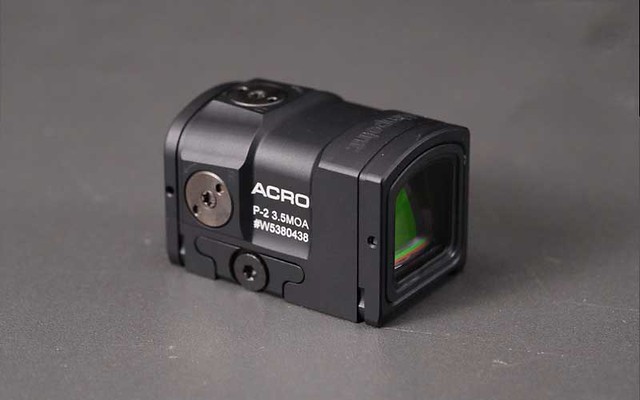
The ACRO P-2 addresses one of the biggest concerns for hunting optics: environmental contamination. Its enclosed design protects the emitter from mud, dust, rain, and vegetation.
Specifications
- 3.5 MOA dot
- Fully enclosed emitter
- 50,000-hour battery life
- Side battery compartment
- ACRO mounting interface
- Waterproof to extreme depths
Pros
- Outstanding environmental protection
- Excellent durability
- Easy battery replacement
- Reliable controls
Cons
- Heavier than Micro optics
- Smaller perceived window
My Hands-On Notes
The side-mounted battery design eliminates the need to remove the optic during battery changes. The battery cap design is robust and simple to manipulate in the field.
Parallax performance is excellent throughout realistic hunting distances. Co-witness configurations are available on numerous rifle mounting systems. The enclosed architecture completely eliminates emitter blockage from debris.
Lens coatings produce a slight blue tint, but image quality remains excellent. Button tactility is crisp, and recoil handling ranks among the best available in a compact red dot.
What People Say Online
Hunters operating in wet climates frequently favor the ACRO because of its enclosed emitter. Many users transitioning from open-emitter pistol optics appreciate the increased reliability.
Mounting Clarity
The ACRO footprint is increasingly supported by aftermarket manufacturers. Direct mounting solutions are available for several dangerous-game rifle platforms, while adapter plates expand compatibility further.
-----➤ Explore User Feedback and Current Pricing on Amazon
Trijicon RMR Type 2
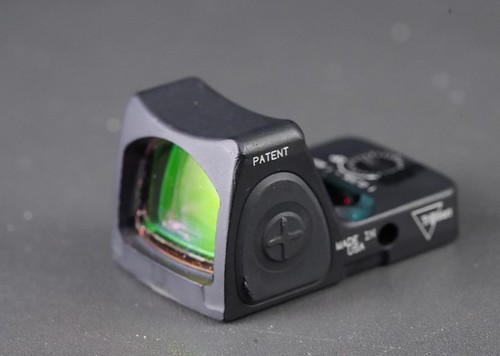
The RMR Type 2 has earned a reputation for surviving abuse that destroys many competing optics. Its forged housing remains one of the strongest in the industry.
Specifications
- Available in multiple dot sizes
- Open emitter design
- Forged aluminum housing
- Long battery life
- RMR footprint
- Proven recoil durability
Pros
- Exceptional toughness
- Huge mounting support
- Lightweight
- Reliable electronics
Cons
- Open emitter
- Top battery access
My Hands-On Notes
The RMR's recoil resistance is legendary. Heavy-caliber hunting revolvers and dangerous-game rifles rarely challenge it. Button operation remains positive with gloves, although the controls are relatively small.
Parallax shift remains insignificant during practical field use. Co-witness options are widespread due to the optic's popularity. Lens tint is noticeable but manageable.
Window size is smaller than modern competition-oriented optics, yet this contributes to its durability. Emitter occlusion remains the primary limitation in severe environmental conditions.
What People Say Online
Hunters, guides, and professional users continue to trust the RMR for hard-recoiling applications. Online discussions frequently cite its long-term durability record.
Mounting Clarity
The RMR footprint is arguably the industry's most supported mounting standard. Numerous direct-mount and plate-based solutions exist for dangerous-game rifles.
-----➤ Explore User Feedback and Current Pricing on Amazon
Holosun 509T
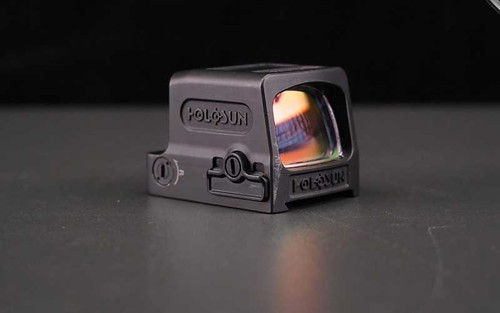
The 509T combines an enclosed emitter with a titanium housing, creating an optic that offers impressive durability and environmental protection.
Specifications
- Titanium housing
- Enclosed emitter
- Multiple reticle options
- Solar backup
- Side battery tray
- Waterproof construction
Pros
- Strong titanium body
- Protected emitter
- Easy battery access
- Competitive price
Cons
- Adapter plate requirement on some rifles
- Slightly heavier than open designs
My Hands-On Notes
The titanium housing inspires confidence on heavy-recoiling rifles. Side battery access is convenient and eliminates unnecessary rezeroing concerns.
Parallax characteristics are well controlled. The enclosed emitter prevents debris-related failures. Lens tint is slightly stronger than Aimpoint optics but remains acceptable in hunting conditions.
Button tactility is excellent, even with cold-weather gloves. Window distortion is minimal. Recoil impulse handling has proven impressive on hard-kicking rifles and slug guns.
What People Say Online
Many hunters appreciate the combination of enclosed-emitter protection and reasonable pricing. The optic frequently receives favorable reviews for durability and value.
Mounting Clarity
The 509T typically uses dedicated mounting interfaces or adapter plates. Compatibility continues expanding as manufacturers add support for the platform.
-----➤ Explore User Feedback and Current Pricing on Amazon
Aimpoint Duty RDS
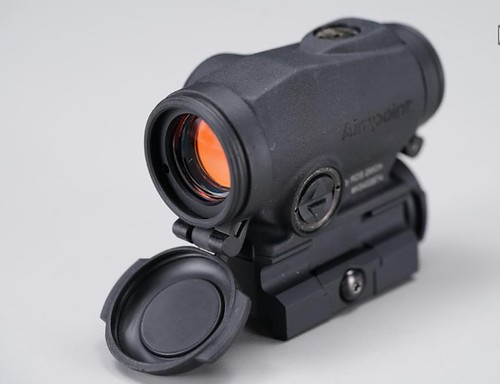
The Aimpoint Duty RDS delivers much of the ruggedness associated with higher-end Aimpoint models while maintaining compatibility with the popular Micro mounting ecosystem.
Specifications
- 2 MOA dot
- Fully enclosed tube design
- Micro-compatible footprint
- Long battery life
- Protected turrets
- Waterproof construction
Pros
- Excellent durability
- Micro mount compatibility
- Strong value
- Proven electronics
Cons
- Slightly larger than T-2
- Heavier than premium Micro models
My Hands-On Notes
The optic's controls are easy to manipulate under stress. Button feel is positive with gloves, and brightness adjustments are straightforward.
Parallax performance is excellent within realistic dangerous-game distances. Co-witness solutions mirror those available for other Micro-footprint optics. Lens coatings are effective without introducing excessive tint.
Recoil handling is excellent. The enclosed tube design offers strong protection against environmental hazards while maintaining a familiar sight picture.
What People Say Online
Users consistently praise its ruggedness and value. Many hunters see it as a practical alternative to the more expensive T-2.
Mounting Clarity
Because it shares the Micro footprint, the mounting ecosystem is extensive. Numerous direct-mount and quick-detach options are available.
-----➤ Explore User Feedback and Current Pricing on Amazon
Trijicon MRO
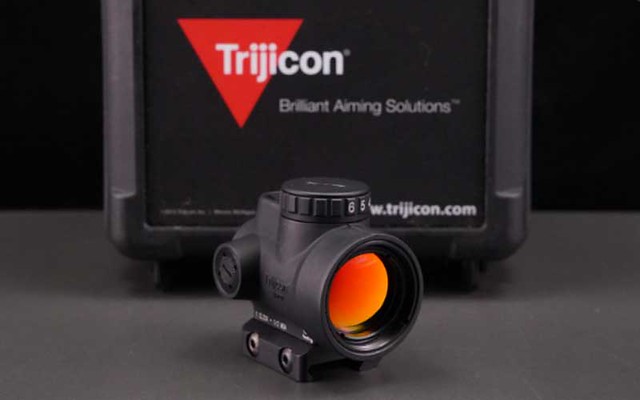
The Trijicon MRO remains popular among hunters who prefer a larger viewing window and a highly durable tubular optic.
Specifications
- 2 MOA dot
- Large objective lens
- Long battery life
- Fully enclosed design
- Lightweight construction
- Waterproof housing
Pros
- Large field of view
- Fast target acquisition
- Durable construction
- Lightweight
Cons
- Slight magnification effect for some users
- Different mounting footprint
My Hands-On Notes
The generous window makes target acquisition extremely fast when tracking moving animals. Controls remain easy to use with gloves.
Parallax performance is acceptable for dangerous-game distances. Co-witness options depend on mount height selection. Lens tint is relatively mild, though some shooters notice a slight magnification effect.
The optic manages recoil well and maintains zero reliably. Window distortion is minimal throughout most of the sight picture.
What People Say Online
Hunters often highlight the large viewing area and rapid target acquisition. Many appreciate its balance between size, durability, and weight.
Mounting Clarity
The MRO uses its own mounting footprint. Numerous mounts are available from major manufacturers, though compatibility is not as universal as the Aimpoint Micro standard.
-----➤ Explore User Feedback and Current Pricing on Amazon
How I Tested / Evaluation Criteria
Parallax Performance
No red dot is entirely parallax-free, but premium optics minimize apparent point-of-impact shifts at realistic engagement distances. I evaluated each optic by intentionally moving my eye position throughout the viewing window while maintaining a fixed target reference.
Co-Witness and Deck Height
Dangerous-game rifles benefit from low mounting heights whenever practical. I evaluated deck height, cheek weld consistency, backup sight compatibility, and the availability of low-profile mounting solutions.
Durability
Durability testing focused heavily on recoil resistance. Optics intended for dangerous-game hunting must withstand repeated firing cycles from powerful cartridges without losing zero or experiencing electronic failures.
Battery Performance
Battery longevity becomes critical during extended hunts in remote areas. I assessed battery accessibility, battery cap durability, runtime expectations, and field-serviceability.
Brightness Range
The best optics remain visible in harsh African sunlight while still offering usable lower settings during dawn and dusk. Brightness adjustment ergonomics were also considered.
Glass Quality
Glass clarity directly impacts target identification. I evaluated lens coatings, edge distortion, tint levels, and overall image quality in varying lighting conditions.
Controls Ergonomics
Stress can dramatically reduce fine motor skills. Buttons and controls were assessed while wearing gloves and during rapid handling drills.
Mounting Ecosystem
The strongest optic can still fail if mounted poorly. I prioritized optics supported by proven footprints and extensive aftermarket mounting options.
Best Red Dot For Hunting Dangerous Game: Mounting & Compatibility Considerations
Mounting compatibility is often overlooked until hunters discover their preferred optic requires expensive adapters or specialized bases. For dangerous-game hunting, I strongly recommend selecting an optic with a proven mounting ecosystem.
The Aimpoint Micro footprint currently dominates the rifle red dot market. Optics such as the Aimpoint Micro T-2 and Aimpoint Duty RDS benefit from widespread support across quick-detach mounts, low-profile hunting mounts, and integrated receiver systems.
The RMR footprint remains extremely common, particularly for compact optics mounted on scout-style rifles, dangerous-game bolt actions, and backup sight systems. Its popularity ensures strong aftermarket support and easy access to replacement mounting components.
Enclosed emitter optics deserve serious consideration for dangerous-game hunting. Mud, blood, rain, vegetation, and dust can block open emitters during field use. Models such as the ACRO P-2 and Holosun 509T largely eliminate this vulnerability.
Weight also matters. While a few ounces may seem insignificant, balance becomes important when carrying a rifle all day. Compact optics often improve handling without sacrificing effectiveness.
Mount quality is equally important. I recommend steel or high-quality aluminum mounts from established manufacturers. Cheap mounts introduce unnecessary failure points.
For heavy calibers, recoil lugs and proper torque specifications become critical. Even the best optic can lose zero if the mounting system shifts under recoil.
Hunters pursuing buffalo, bear, or similar game should prioritize rugged mounting systems that maintain zero despite repeated heavy recoil cycles. A durable optic paired with a proven mount provides the highest confidence when the shot matters most.
FAQs
What MOA dot size is best for dangerous game hunting?
A 2 MOA to 4 MOA dot generally offers the best balance of precision and speed. Larger dots are often easier to acquire quickly under stress.
Are enclosed emitter red dots better for dangerous game?
Yes. Enclosed emitter designs provide greater protection from mud, rain, dust, and debris that can obstruct an open emitter.
Can a red dot survive .458 Lott recoil?
Premium optics such as the Aimpoint T-2, ACRO P-2, and Trijicon RMR Type 2 have strong reputations for surviving extremely heavy recoil.
Is battery life important for hunting optics?
Absolutely. Long battery life reduces maintenance requirements and increases reliability during extended trips.
Which footprint has the best mounting support?
The Aimpoint Micro footprint and RMR footprint currently offer the broadest compatibility across mounting systems.
Conclusion
For hunters pursuing dangerous animals at close range, the Best Red Dot For Hunting Dangerous Game remains the Aimpoint Micro T-2 because of its exceptional durability, proven recoil resistance, enormous mounting ecosystem, and long-term reliability. The ACRO P-2 is the strongest enclosed-emitter option, while the Trijicon RMR Type 2 remains one of the toughest compact optics available. Regardless of the optic selected, pairing it with a high-quality mount and verifying compatibility with your rifle platform is essential for dependable field performance.